
Water Softener / Ion Exchange System
Custom-designed and installed ion-exchange water softening systems for industrial and household use. Price on request.



please contact us for a tailored quote.
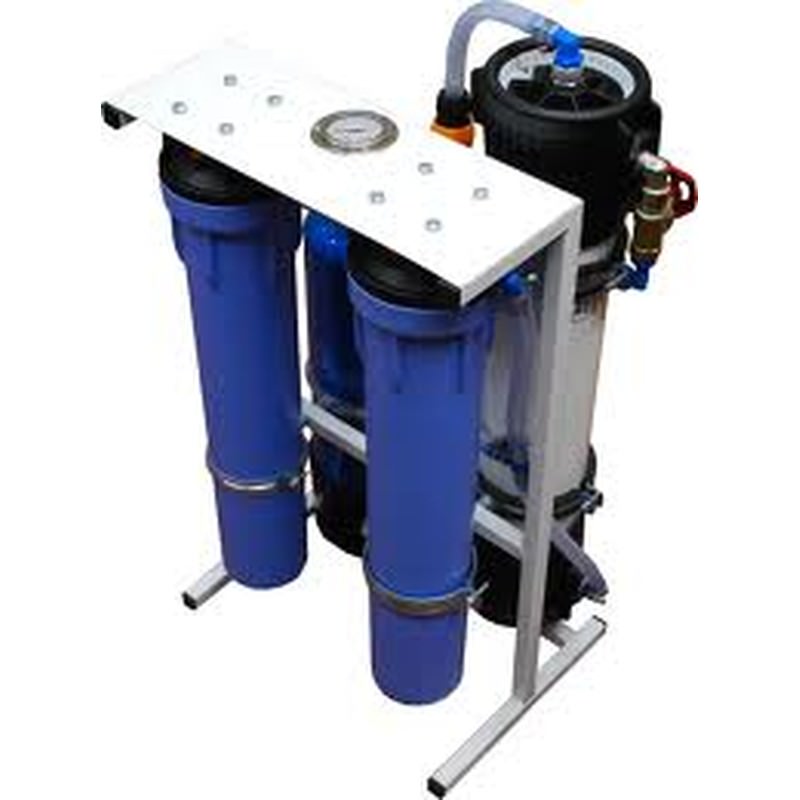
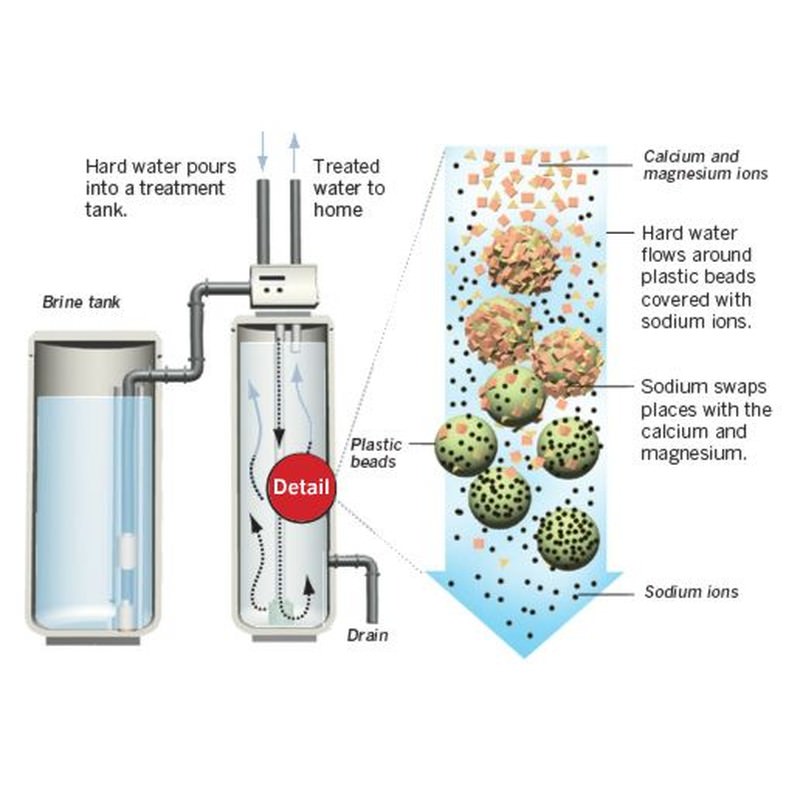
A water softener reduces the calcium, magnesium, and to some degree manganese and ferrous iron concentration in hard water. These “hardness ions” cause three major kinds of problems. 1. The metal ions react with soaps and calcium sensitive detergents, hindering their ability to lather properly and forming an unsightly precipitate— the familiar ‘bathtub ring’. 2. Presence of “hardness ions” also inhibits the cleaning effect of detergent formulations. More seriously, calcium and magnesium carbonates tend to adhere to the surfaces of pipe sand heat exchanger surfaces. The resulting scale build-up can restrict water flow in pipes. In boilers, the deposits act as thermal insulation that impedes the flow of heat into the water; this not only reduces heating efficiency, but allows the metal to overheat which, in a pressurized system, can lead to failure. 3. The presence of ions in an electrolyte can also lead to galvanic corrosion, in which one metal will preferentially corrode when in contact with another type of metal. How water softeners work: Water softeners are ion exchangers. Hard water with a high calcium/magnesium content enters the softener through the “In” port. It passes through the control valve and into the tank, where it goes from top to bottom through a specially prepared resin that “softens” it. The resin consists of specially manufactured beads that have been saturated with sodium ions. “Softening” occurs as the hardness minerals in the water attach themselves to the resin and are “exchanged” for sodium. The softened water then enters the long centre tube, called a riser, via the strainer basket in the bottom of the tank and passes upward through the riser. The water exits the softener via the control valve (blue arrow) and is sent to the outlet. When the resin becomes saturated by hardness minerals, the softener automatically goes into regeneration. (The regeneration process is initiated by a timer or a meter, depending on the type of softener you purchase.) By this process the hardness minerals are washed down the drain and the resin bed is rinsed, resettled, and recharged with sodium. It is now again ready to soften your water. The regeneration process is accomplished by passing very salty water from the brine tank through the resin. The brine tank must remain filled with softener salt at all times so that it can regenerate the softening resin again and again. Design, build & install: Watericon provides a comprehensive range of ion exchange solutions and services including ion exchanger valves and spare parts, a selection of high grade resins, and pre-packaged ion exchange units. Applications: • Water softening for industrial & household potable and process water • Demineralisation/deionization of boiler feed water • Pharmaceutical processes • Food & Beverage • Metals recovery • Arsenic removal by use of specialised ion exchange resins. • Borehole Water Price on request –
Related products

Why people love our products
High-quality, ethically sourced products at affordable prices
Be the first to leave a review.
There are no reviews yet.